Donate to the Cause
Thank you so much for your interest in donating to our advocacy! Your donation will be used for food heritage research, field work expenses, website hosting and maintenance, and the like so that I can continue sharing our different local food cultures and ingredients.


Donate to the Cause
Thank you so much for your interest in donating to our advocacy! Your donation will be used for food heritage research, field work expenses, website hosting and maintenance, and the like so that I can continue sharing our different local food cultures and ingredients.
Pupuan
𝘈𝘳𝘵𝘰𝘤𝘢𝘳𝘱𝘶𝘴 𝘢𝘯𝘪𝘴𝘰𝘱𝘩𝘺𝘭𝘭𝘶𝘴
Pupuan ((Palaw-an))
Native
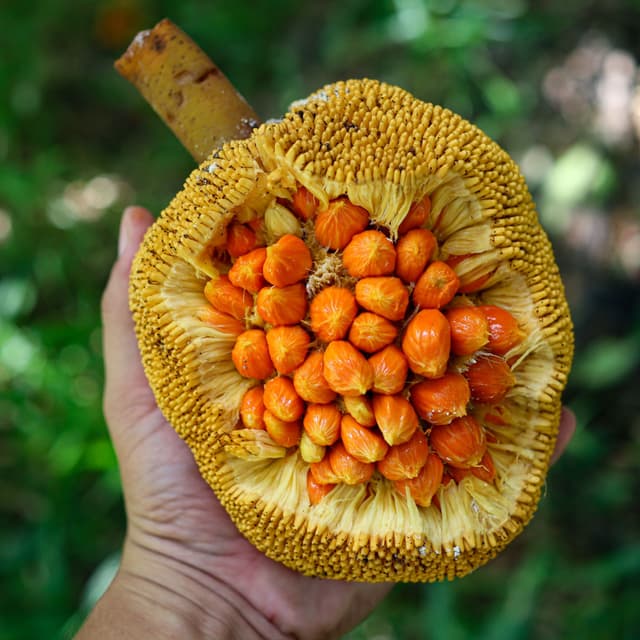
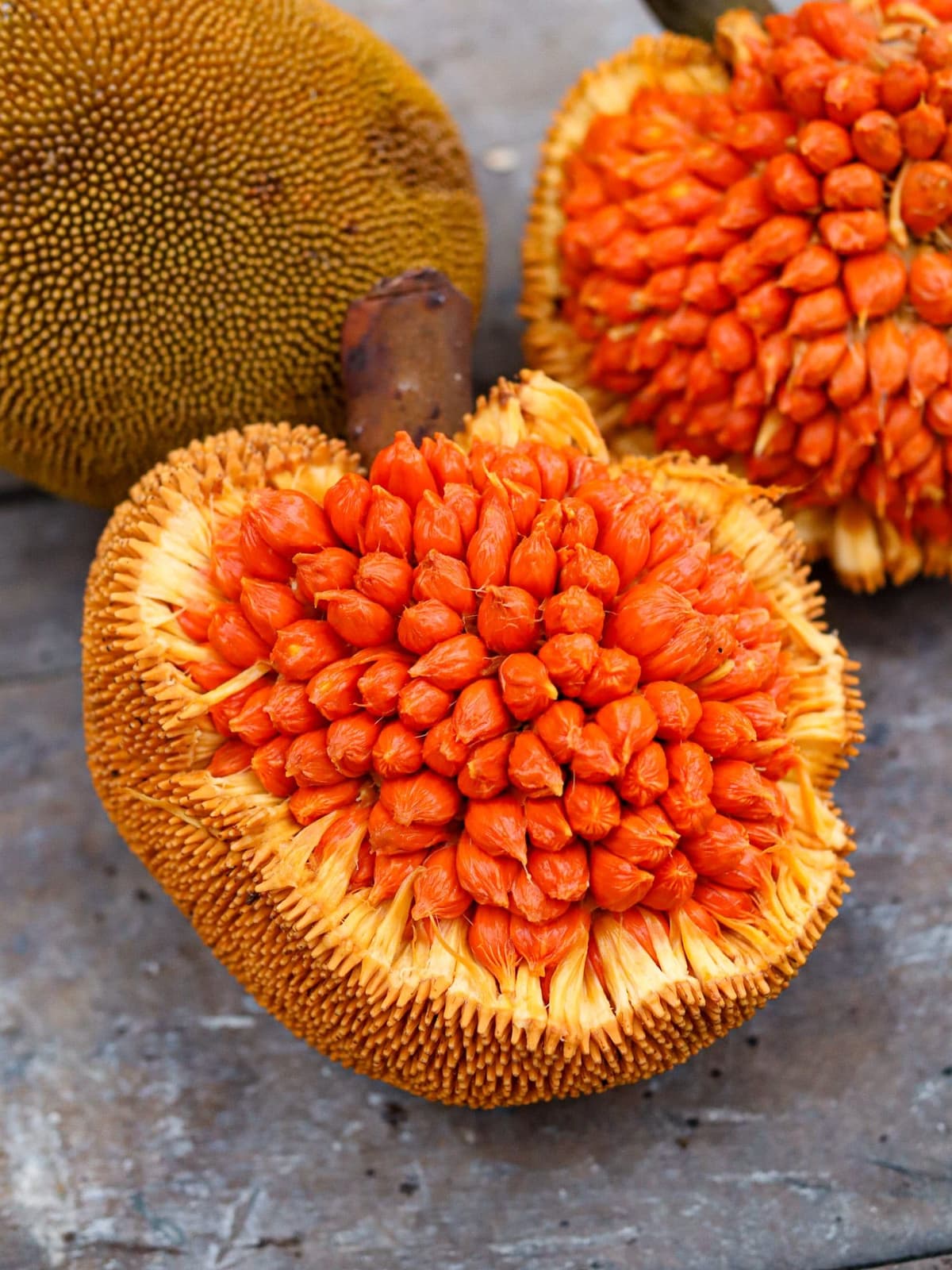
Popwan (Artocarpus anisophyllus) is a species from the genus Artocarpus, a relative of marang, langka, rimas, and kamansi. The species is native to Borneo, the Malay Peninsula, Singapore, Sumatra, Thailand, and the Philippines. In the Philippines, it is distributed in Misamis Occidental, Zamboanga, Basilan, and Palawan.
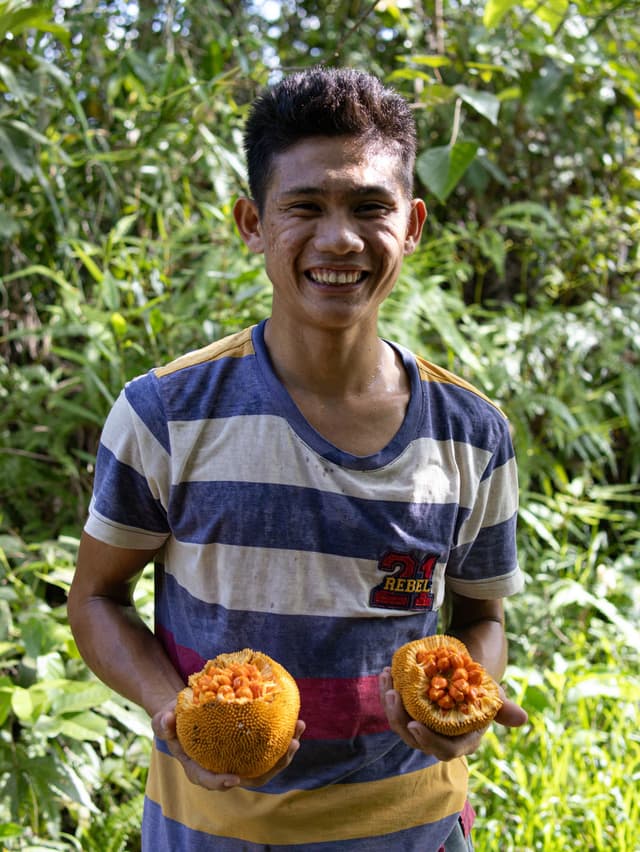
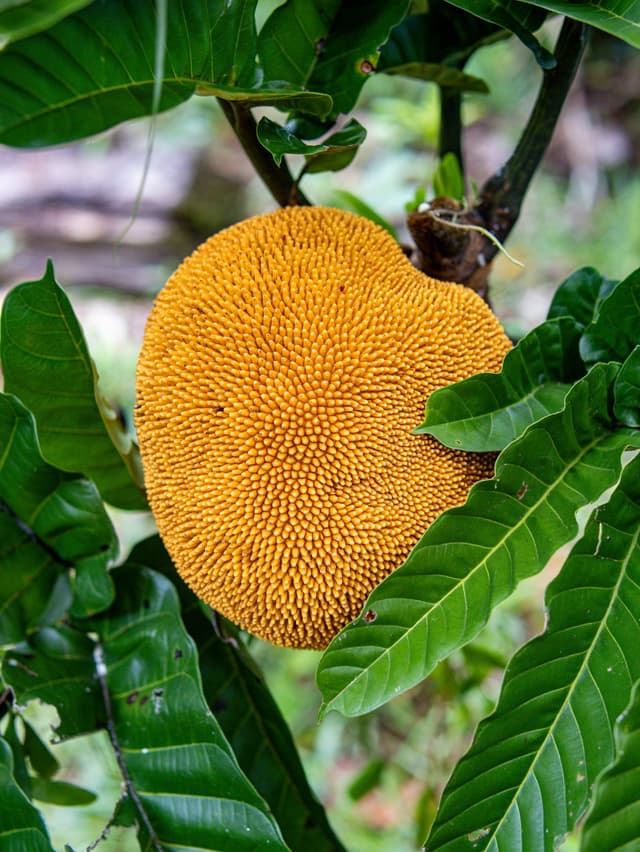
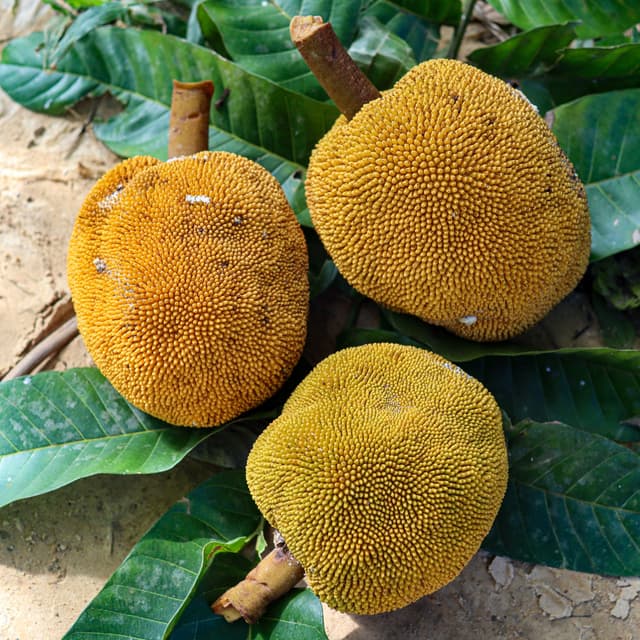
This extremely tall tree, which can grow up to 45 meters in height, produces a globose fruit with a yellowish-brown exterior. The most distinct feature of popwan is its edible pulp, which resembles marang but is vibrant orange in color. In terms of taste, locals liken it to the flavor of a banana. In addition to its edible pulp, the seeds of popwan can be boiled or roasted. The season of the fruit is around July to August.
Popwan is classified as a "Vulnerable" species by the IUCN.