Donate to the Cause
Thank you so much for your interest in donating to our advocacy! Your donation will be used for food heritage research, field work expenses, website hosting and maintenance, and the like so that I can continue sharing our different local food cultures and ingredients.


Donate to the Cause
Thank you so much for your interest in donating to our advocacy! Your donation will be used for food heritage research, field work expenses, website hosting and maintenance, and the like so that I can continue sharing our different local food cultures and ingredients.
Dugyan
𝘋𝘶𝘳𝘪𝘰 𝘨𝘳𝘢𝘷𝘦𝘰𝘭𝘦𝘯𝘴
Native
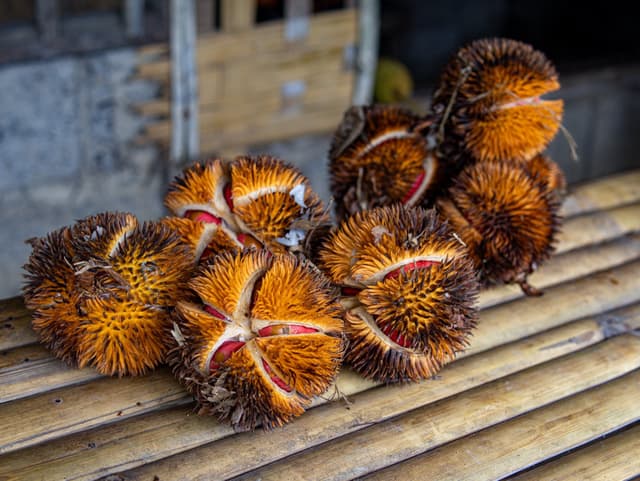
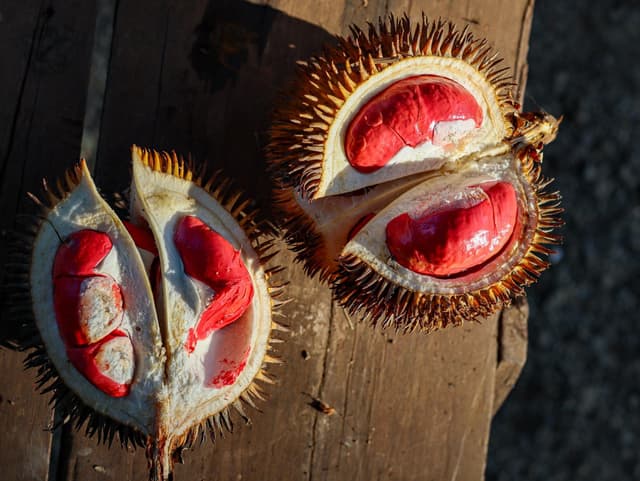
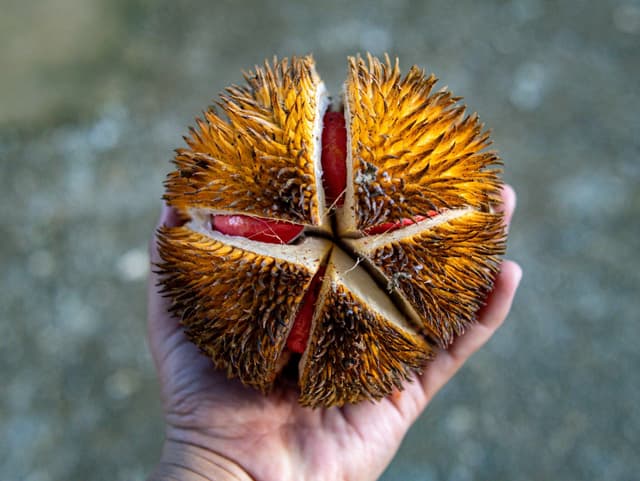
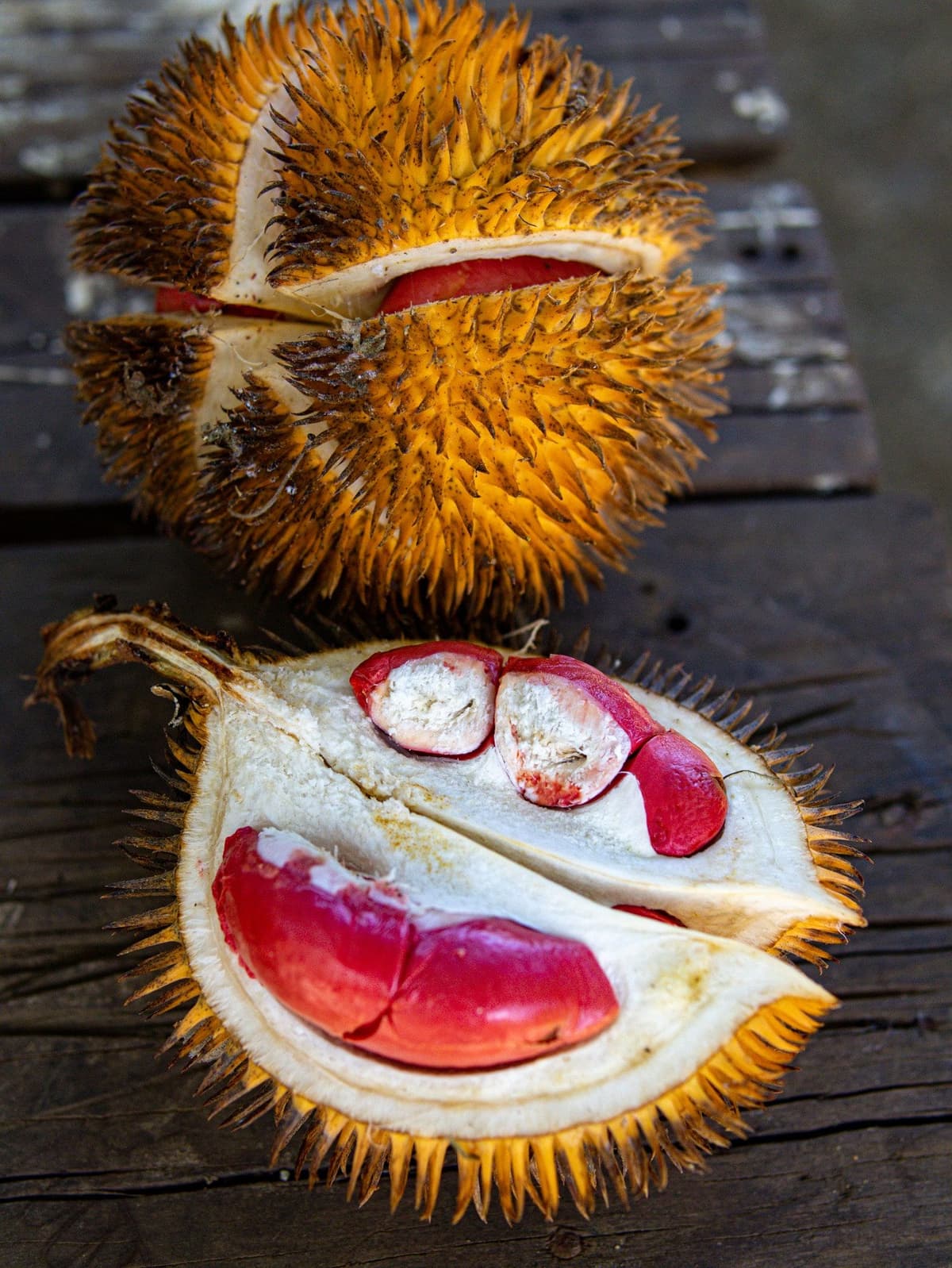
Dugyan (Durio graveolens) or the red durian, is a unique wild species of durian primarily found in Palawan. However, the species is also native to Borneo, the Malay Peninsula, and Thailand. Unlike the commonly cultivated durian (Durio zibethinus), Dugyan stands apart as a distinct species.
What truly sets Dugyan apart is its vibrant edible flesh, ranging from delicate pink to captivating lipstick red. In a departure from the strong aroma associated with regular durians, Dugyan's fragrance is comparatively mild (despite its scientific name graveolens which means 'strong smelling’).
The flavor of its flesh, described by locals as "malinamnam," doesn't lean towards sweetness. Instead, it finds its place in steamed rice or serves as a cooked vegetable. In addition, locals also preserve it with honey, boasting a shelf life of up to seven years.
Dugyan is one of the wild durians of Palawan, along with Manakuka (yellow-fleshed) and Lowad (white-fleshed), with Lowad being considered superior in taste, even when compared to cultivated durian.
Dugyan is categorized as "Endangered" in the DENR National List of Threatened Flora.