Donate to the Cause
Thank you so much for your interest in donating to our advocacy! Your donation will be used for food heritage research, field work expenses, website hosting and maintenance, and the like so that I can continue sharing our different local food cultures and ingredients.


Donate to the Cause
Thank you so much for your interest in donating to our advocacy! Your donation will be used for food heritage research, field work expenses, website hosting and maintenance, and the like so that I can continue sharing our different local food cultures and ingredients.
Sakurab
𝘈𝘭𝘭𝘪𝘶𝘮 𝘤𝘩𝘪𝘯𝘦𝘯𝘴𝘦
Sakurab ((Meranaw))
Introduced
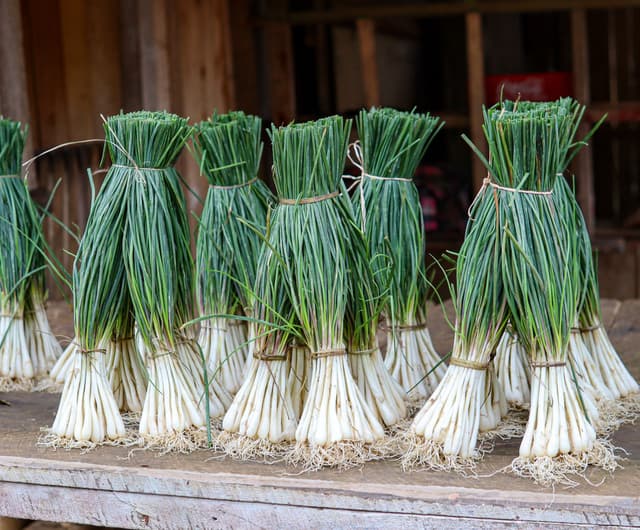
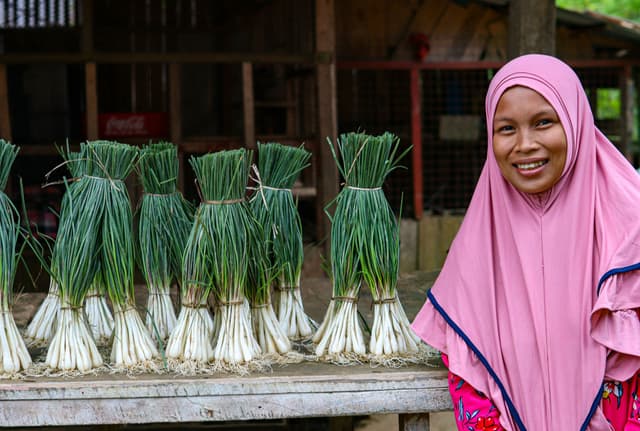
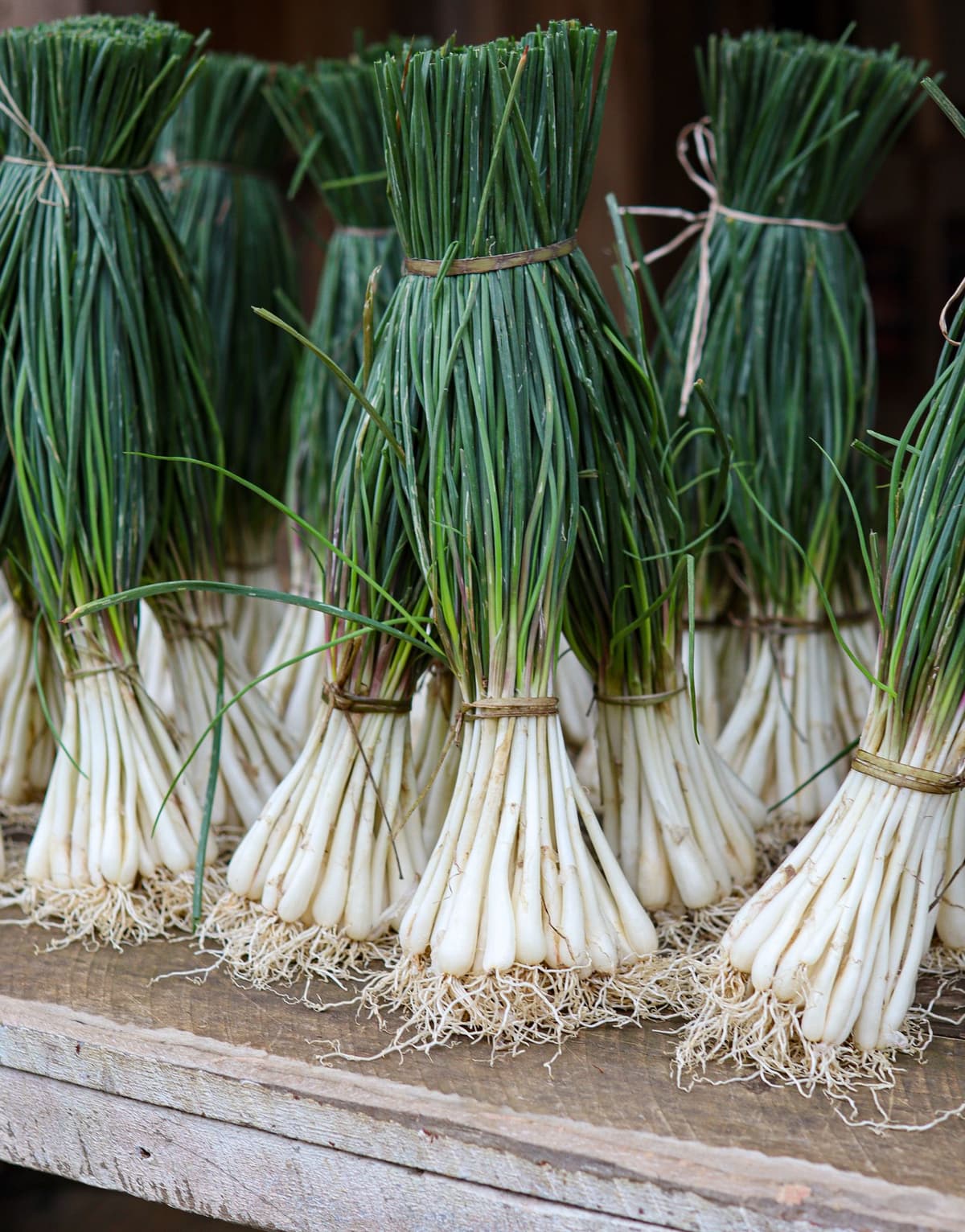
One of the most important, if not the most vital, ingredients in Meranaw culinary heritage is a type of allium known as sakurab, also called sibujing in the Visayan language. Scientifically known as 𝘈𝘭𝘭𝘪𝘶𝘮 𝘤𝘩𝘪𝘯𝘦𝘯𝘴𝘦, this perennial plant is characterized by long green stalks and crisp white bulbs with a strong, onion-like yet distinctive odor. It holds both cultural and economic significance for the Meranaws, as it is cultivated in farmlands for profit and in home gardens and backyards for household consumption.
Sakurab is ubiquitous in the Meranaw food landscape as it serves as the key ingredient in palapa, a traditional condiment and food seasoning. Palapa is used in many local dishes such as piaparan, inaluban, rendang, pisasati, and more. In homes and food establishments, it is the default seasoning, added while cooking, and also eaten as a side dish or condiment, often paired with fried or grilled fish and other viands. The basic components of palapa are sakurab, chili, salt, and ginger, though variations with additional ingredients exist. One such variation includes toasted grated coconut (tiyolo).
Sakurab is typically cultivated in areas with moist loamy soil in the Lanao provinces, often planted on slopes where natural drainage prevents waterlogging. The planting season is usually during the rainy months, as extreme summer heat makes the soil hard, dry, and unsuitable for the allium. The process begins with tilling the land to loosen the soil, followed by covering the surface with organic material known as ampas, which serves as both fertilizer and weed control. Ampas can be made from dried corn stalks, rice straws, or cogon grass. Once the soil is prepared, holes are made using a large metal rod called buso, and sakurab bulbs are planted.
The crop is ready to harvest after 3–4 months, though it can still be harvested up to 5–6 months, albeit considered late by then. During harvest, farmers leave a few bulbs in the ground to allow them to multiply. Sakurab that reaches its 8th month of growth is used for propagation. The new small bulbs can be planted to grow new sakurab plants.
Harvested sakurab is distributed to various municipalities/cities, including Marawi, Iligan, and Cagayan de Oro. It also reaches Luzon, especially in areas with significant Meranaw populations, such as Quiapo, Manila, and Manggahan, Quezon City.